 HSL Mobile App
 Crude oil: A spanner in the works
The recent surge in crude prices is proving to be a spoiler in India’s growth story. Increased volatility has been witnessed in international crude oil prices in March and April this year.
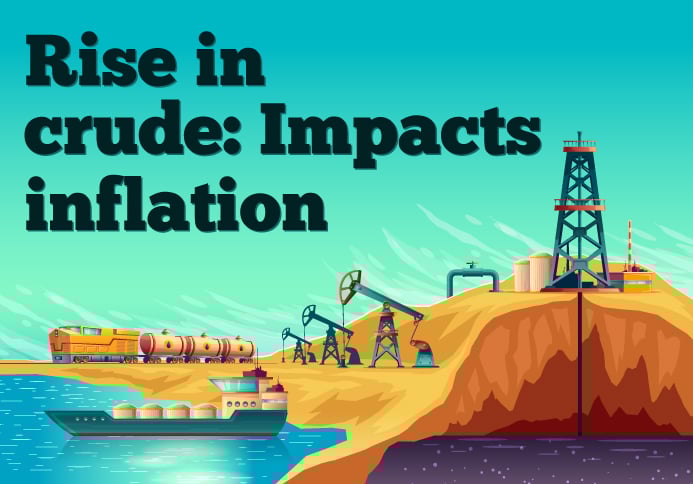
The recent surge in crude prices is proving to be a spoiler in India’s growth story. Increased volatility has been witnessed in international crude oil prices in March and April this year.
The fact that this has happened despite a substantial increase in shale gas production makes the outlook even more blurred, going ahead. The price of oil is one of the principal factors that have a direct impact on the Indian economy, as the country’s imports almost 80% of its crude requirements.
India enjoyed the luxury of low crude prices for several years, as they dipped from over US$ 100 a barrel to under US$ 40 a barrel. However, the price has now recovered to around US$ 75 a barrel and may go higher.
Price of Government Intervention
India’s largest commodity exchange, Multi Commodity Exchange of India (MCX), allows trades in Brent Crude Oil, Crude Oil, and Crude Oil Mini. Investors have easy access to live data for crude oil prices, enabling them to track any changes and act accordingly.
The timing of the increase in the price of crude is bad, to say the least. The country is facing a situation of disheartening macros (wider trade deficit, CAD etc.,) and a slowdown in growth, which could worsen if prices remain at the current level.
According to a statement made by rating agency ICRA, the current hike in global crude oil prices could possibly impact the Government’s revenues and fiscal position.
“In order to soften the impact on consumers from rising fuel prices, if the Government of India chooses to cut excise duty on petrol and diesel again, its revenues and fiscal position will face some pressure. The country’s fiscal position would get adversely affected by a rise in the subsidy burden on domestic LPG and PDS kerosene, especially considering the robust growth in LPG consumption,” the report says.
The import factor
According to RBI estimates, the price of oil at US$ 78 a barrel would decrease 10 basis points from its 7.4% forecast for the country’s gross domestic product. The central bank expects expensive crude oil to trigger a rise in inflation by 30 basis points, nullifying expectations that the monetary policy could become more dovish. The RBI plans to keep inflation at ~4%.
The possibilities of a further weakening of the rupee are very real.
According to ICRA’s estimates, “Gross under-recoveries of oil companies on sensitive petroleum products are expected to be higher in a range between Rs 41,000cr and Rs 46,000cr for 2018-19, assuming that the average Indian basket crude price of US$ 70-75 per barrel and a Rupee-Dollar exchange rate of 66 (as compared to the estimated Rs 25,000-26,000cr in the previous fiscal (2017-18). For every US$ per barrel rise in the Indian basket crude price, annual gross under-recoveries will increase by around Rs 1,300cr and net import bill by US$ 1.3 bn.”
India Inc’s earnings hit
The increase in crude prices has impacted and will continue to impact the margins of Indian companies (except for oil exploration companies if they are allowed full realization of increased crude prices). Growing expectations of a revival in earnings, propelled by consumption in rural India, will undoubtedly be questioned. It is evident that an increase in oil prices will raise input costs (like raw materials) for most corporates, and force consumers to spend more on gasoline.
Events such as these in the year preceding the General elections would increase the challenges faced by the Government, and how it tackles the situation is left to be seen.
Related Posts
Don't miss another Article
Subscribe to our blog for free and get regular updates right into your inbox.
Categories




Subscribe for our
newsletter
newsletter
