 HSL Mobile App
 Divestment in CPSEs: On the right track
HDFC, Tester
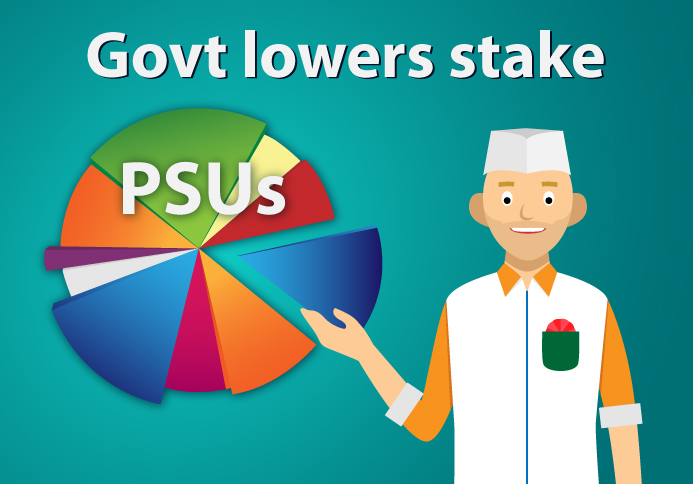
The Government is in the process of mapping out a plan to lower its stake in all central public sector enterprises (CPSEs) to 49%. It plans to complete this process in a time span of three years. These entities are owned either by the Union Government, State Governments, or both. However, the Government will retain its stake in strategic sectors like defense and oil.
The process
The Government holds 51% or more in 250 CPSEs. Target companies are being identified by its apex planning body, NITI Aayog (National Institution for Transforming India). These companies are expected to benefit from this process in terms of increased transparency and independence, reduced political interference, and the induction of the much-needed element of professional management.
The Government has acknowledged the growth potential of CPSEs, and also their ability to contribute to sectors like rural housing, renewable energy, solar, pharmaceuticals, and tourism. It has encouraged these companies to use digitization, e-mobility, analytics and blockchain technology to grow and expand their businesses.
The start
The process has commenced with the launch of the RITES (formerly known as the Rail India Technical and Economic Services Ltd) primary issue. A transport and engineering consultancy firm, RITES takes up projects on an Engineering, Procurement, and Construction (EPC) basis for the Railways. RITES is the first state-run railway company to launch an initial public offering (IPO).
“The Government nearly met its target of divestment in FY18. In the current fiscal too, it plans to make a stake sale in listed companies, and also by way of new listings, such as the RITES issue. We believe that the Government will meet its target in FY19,” says Kushal Rughani, Equity Research Analyst at HDFC securities-PCG Department.
Other facets
The Government also plans to dilute its stake via the secondary market route. Large companies in which it is likely to trim its stake include Steel Authority of India Ltd and Power Grid Corporation of India Ltd, among others. Its target is to raise Rs 80,000 cr via PSU disinvestment in FY19. In the previous fiscal (FY18), Rs 1.03 lakh crore was raised via the same method.
Upcoming IPOs include that of the Indian Railway Finance Corporation (IRFC) and the engineering firm RVNL.
In another move, the Finance Ministry plans to transfer shares of five sick CPSEs to the Special National Investment Fund (created to receive the disinvestment proceeds of CPSEs) to meet the market regulator’s (Sebi’s) norm of a minimum of 25% public shareholding.
“A few sick enterprises are in severe need of capital or a partner. The Government is moving in the right direction, as this step may give the sick companies some sort of an uplift by way of infusion,” says Mr. Rughani.
The Government’s stake in these companies stands at:
- 89.25% in Andrew Yule & Company,
- 90% each in FACT and Hindustan Photo Films,
- 93.69% in HMT and
- 93.74% in Scooters India.
Mr. Rughani feels that the process of divestment brings with it many positives. “Divestment in CPSEs is a welcome move taken by the Government. There will now be transparency in disclosures, and companies involved in this process will greatly benefit from their partners,” he says. This move by the Government is sure to add value to the Indian economy.
Related Posts
Don't miss another Article
Subscribe to our blog for free and get regular updates right into your inbox.
Categories




Subscribe for our
newsletter
newsletter
