 HSL Mobile App
 Real estate sector: Triple trouble
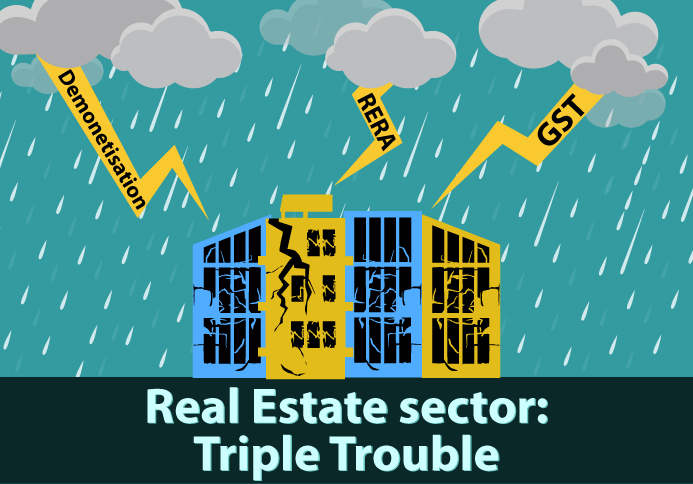
While the Good and Services Tax (GST), the Real Estate (Regulation and Development) Act and demonetization were initially dampeners for the real estate industry in the country, the impact of these will undoubtedly be favorable in the long term. It is very likely that a few short-term jolts will develop into a long-term success story for the real estate sector.
The demonetization initiative by the Central Government called for an unexpected ban of Rs 500 and Rs 1,000 currency notes. This, in turn, resulted in a colossal cash crunch, where limited or no cash was available for the real estate sector in India to invest in real estate assets. Transactions in the real estate sector, which are excessively dependent on the cash component (primarily the premium housing and the residential land categories), were impacted the most. This subsequently led to an abrupt dip in housing demand across all categories.
Though demonetization resulted in a palpable strain on ongoing real estate projects, it also paved the way for the development of more transparency. This move has impacted all the players– brokers, buyers, owners,and developers – and left them with no choice other than taking a relook at their businesses and future plans. They will also be forced to clean up their balance sheets, so as to access funding from legitimate sources.
RERA roars
The second move in the real estate realm has completed a year now - the inception of the Real Estate Regulation Act (RERA). According to RERA, each state and Union Territory will have its own regulator and set of rules to govern its functioning. Till date, 27 states and Union Territories have notified rules under RERA. In addition to this, 16 states and Union Territories have a portal to assist in the online registration of projects and agents in the realty vertical.
This is expected to fructify into a game changer, as it will help buyers by instilling clarity and fair practices to protect their interests, and penalize fraudulent builders. RERA tackles issues like delays in the completion projects, the primary reason of which is the diversion of funds to other projects. There are other factors, though notably less, like changes in regulations by authorities and other bodies involved in infrastructure development.
Introduction of GST
The Goods and Services Tax (GST) was implemented on 1st July 2017 in India, replacing the existing service tax regime. The impact of GST on the real estate sector will increase transparency and simplify the process.
In the pre-GST period, the quantum of tax the buyer paid depended on the status of construction of the property, i.e., whether it was under construction or completed. When a buyer bought property under construction, he needed to pay VAT, service tax, stamp duty, and registration charges. However, properties bought after the completion of construction were exempt from VAT and service tax. Only stamp duty and registration charges had to be paid. VAT, stamp duty, and registration charges varied from state to state.
The biggest benefit of GST is that it is simple and applicable to the overall purchase price across all categories. All under constructionproperties will be charged 12% of the property value, excluding stamp duty and registration charges. For completed properties, the earlier provisions will continue. Buyers will pay no indirect tax on the sale of properties that are ready to be moved into.
So, given these facts, it is very likely that a few short-term jolts are very likely to develop into a long-term success story for the real estate sector. This sector has witnessed a mix of mayhem and opportunities in the recent past and may continue to do so through 2018. Even though it may take time for these changes to fructify, the long-term view is definitely favorable.
Related Posts
Don't miss another Article
Subscribe to our blog for free and get regular updates right into your inbox.
Categories




Subscribe for our
newsletter
newsletter
