 HSL Mobile App
 SIP Vs Lumpsum: Which Investment Method is Better?
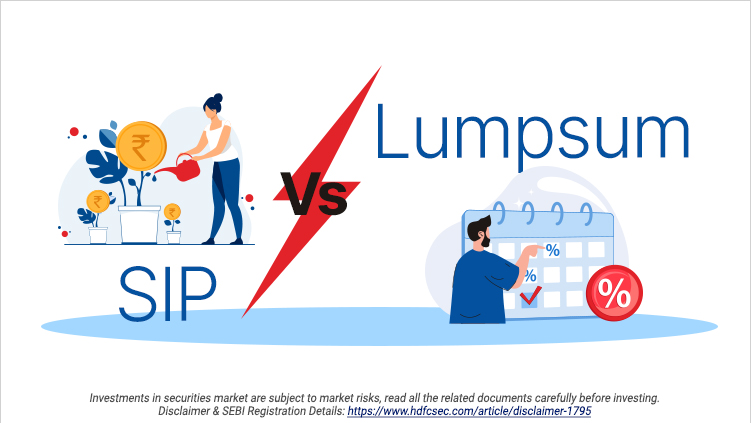
Investing is an activity that can help one create and manage wealth. There are numerous investment avenues that an individual can choose from including stocks, mutual funds, bonds, commodities etc. Among various options, investing in mutual funds is ideal for investors looking to get exposure to a broad range of different asset classes. You can invest in mutual funds through a Systematic Investment Plan (SIP) or lumpsum. In this article, we will discuss the pros and cons of both methods, and which one might be a better choice for your financial goals, SIP or Lumpsum.
What is SIP?
A Systematic Investment Plan or SIP is a method of investing in which an individual can invest a small sum of money at periodic intervals. The amount for investment is fixed by investors which is then debited from their bank accounts at regular intervals.
There are multiple benefits of investing through a SIP.
Better cost price average
One of the major benefits of a SIP is a better cost-price average. Since the price of a security may fluctuate, through SIP an investor can purchase more units of security when the price is lower and lesser units at a higher price. This helps in providing a better average cost price to the investor.
You can also use the SIP Calculator by HDFC SKY to estimate potential returns and better plan your investments.
Removes the need for a large capital
One can begin investing through SIP with as little as Rs 500. This removes the need to have a large amount of capital and makes investing accessible for people earning a fixed income.
Flexible
When it comes to SIP vs Lumpsum, SIP is a flexible method of investing. The SIP amount can be increased or decreased and an investor can pause or resume the SIP at their convenience.
Compounding
Through SIP, an investor can reap the benefits of compounding. A small amount is invested for a long period of time which helps an investor earn returns on their returns which have been reinvested. This significantly increases the profits.
What is Lumpsum?
A lumpsum investment is when you invest a bulk amount into a single asset or a mutual fund scheme or portfolio all at once. This strategy is used to quickly build wealth.
When it comes to the debate of SIP vs Lumpsum, we should look at the benefits of lumpsum investing as well.
The primary difference between SIP and lumpsum is that a large sum of money is invested in one go in lumpsum investment. Lumpsum investment is beneficial while investing in debt securities as you can’t invest in them through SIP. Lumpsum investment method uses the timing of the market and is done for long term. However, the risk of investing a huge chunk of money in one go is high.
SIP and Lumpsum investment are both suitable options for investors, but it is essential to consider one’s financial goals and risk profile before choosing the investment strategy. Both these methods have different benefits. Ultimately, to maximize returns in the long term, investors should choose to diversify their investments by allocating funds to both SIP and Lumpsum investments.
Related Posts
Don't miss another Article
Subscribe to our blog for free and get regular updates right into your inbox.
Categories




Subscribe for our
newsletter
newsletter
